When summer heat hits the valley, some rooms turn into hot spots, AC bills creep up, and the view gets sacrificed to heavy shades. Temperature-control window film is a faster, more affordable way to tame heat and glare without making your home feel dark or closed in. Modern films let in natural light while cutting the parts of sunlight that raise indoor temps and fade furnishings.
How temperature-control film works (quick and clear)
Sunlight brings visible light (what you see) and infrared (what you feel as heat). Spectrally selective films target the heat-heavy wavelengths, reducing the amount that passes through glass so rooms stay more even in temperature—often without the mirrored or “tinted” look. Premium non-metal, multi-layer films can reject a large share of infrared energy while maintaining high clarity.
Key comfort benefits
- Heat reduction: Advanced films can reject a significant portion of total solar energy, with leading series specifying up to ~60% heat rejection and very high infrared rejection. Results vary by film and glass type.
- UV protection: Most architectural films block ~99% of UV to help slow the fading of floors, artwork, and furniture.
- Glare control: Carefully chosen visible light transmission (VLT) tames screen glare without blacking out your view.
Why this matters more in Las Vegas
Las Vegas sees intense sunshine and very high UV for much of the year, with peak UV indices reaching “very high” to “extreme” in late spring through summer. That accelerates heat gain and fading indoors—especially on west- and south-facing windows. Films that filter heat and UV deliver outsized comfort here without losing the skyline views we all love.
Picking the right film for your home
1) Spectrally selective (non-metal) films
Best when you want a neutral look with strong heat/IR rejection and minimal reflectivity (great for HOA-sensitive neighborhoods). Many top options avoid signal interference because they’re non-metal.
2) “Insulating” films for year-round balance
If you’re in a draft-prone home or a higher-elevation part of the valley, these films help retain warmth in cooler months while still rejecting heat in summer—useful for rooms you use day and night.
3) Dual-reflective / glare-first films
Ideal for bright media rooms and home offices where screen comfort matters most, with daytime privacy as a bonus.
4) Add-on priorities
Need more privacy, decorative patterns, or added glass safety? You can layer priorities like daytime privacy or shatter-resistant security films as part of a full-home plan.
What performance should you expect?
Every window system is different, but here’s what homeowners typically aim for:
- Noticeably cooler rooms on west and south exposures while keeping natural light.
- UV reduction near 99% to help protect floors, art, and fabrics.
- Balanced look inside and out—premium films are designed to stay clear and neutral rather than shiny or dark.
Note: Individual “up to” specs (e.g., IR or total solar energy rejection) depend on the exact film series and your glass. We’ll show samples and spec sheets so you can compare options side-by-side.
Where films make the biggest difference
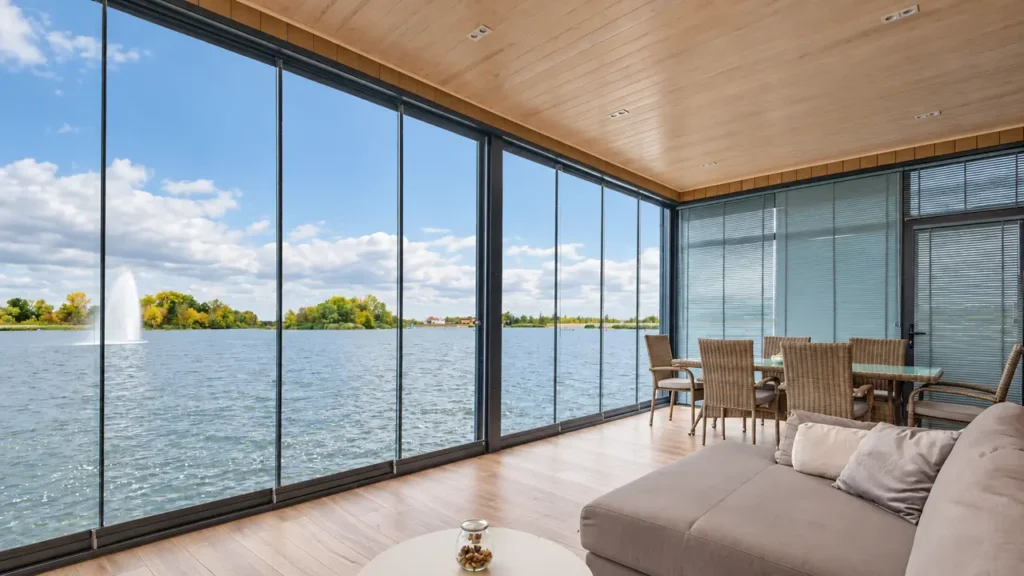
- Floor-to-ceiling sliders and big panes
- West-facing great rooms and upstairs bedrooms
- Home offices and media rooms struggling with glare
- Areas with sun-bleached floors or fading upholstery
Installation & care (what to expect)
- Consultation & glass audit: We measure, map exposures, and match films to your goals (heat reduction, glare, privacy, or all three).
- Clean install: Films are precision-cut, applied with low-VOC solutions, and squeegeed for optical clarity.
- Cure time: A slight haze can appear as moisture evaporates; it clears as the film cures.
- Warranty: Leading manufacturers back residential films with robust warranties on materials; you’ll get written coverage details for your chosen series.
FAQs
Will it make my home dark?
Not if you don’t want it to. Spectrally selective films aim to cut heat more than visible light, so rooms can stay bright without the hot “sting” of midday sun.
Can I still see my views?
Yes. Many films are designed for high clarity and neutral color, keeping the view clear while taming heat and glare.
Does it help with fading?
Films that block ~99% of UV and reduce solar heat can significantly slow fading of floors and furnishings.
What about winter?
“Insulating” films help retain indoor warmth during colder spells and still reject heat in summer—useful for year-round comfort.
Will it look mirrored from the outside?
That’s up to you. Neutral, low-reflective films exist if you prefer a less shiny look; dual-reflective styles are available if daytime privacy is a priority.
Ready to test a room?
Book a quick in-home assessment with Las Vegas Window Tinting. We’ll bring film samples to your glass so you can see the difference in real time.