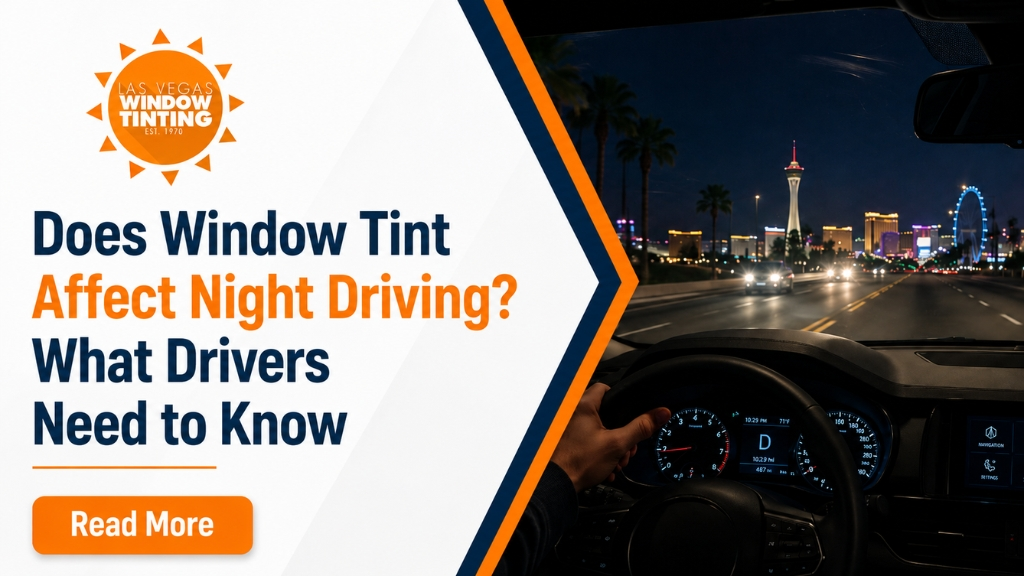
Yes, window tint can affect night driving. Darker window tint reduces the amount of visible light entering your vehicle, which may make it harder to see pedestrians, road signs, cyclists, and obstacles in low-light conditions. However, high-quality window tint that complies with local laws can still provide heat rejection, UV protection, and glare reduction without significantly affecting nighttime visibility.
The impact largely depends on the tint darkness, film quality, weather conditions, and the driver’s eyesight.
Understanding How Window Tint Works
Window tint is designed to reduce the amount of sunlight, heat, and ultraviolet (UV) rays entering a vehicle. Different tint films are available in varying levels of darkness, commonly measured by Visible Light Transmission (VLT).
VLT refers to the percentage of visible light that passes through the window.
For example:
- 70% VLT allows 70% of light through.
- 50% VLT allows 50% of light through.
- 35% VLT allows 35% of light through.
- 20% VLT allows only 20% of light through.
- 5% VLT is extremely dark.
The lower the VLT percentage, the darker the tint and the greater its potential impact on night driving visibility.
How Window Tint Can Affect Night Driving
Reduced Visibility in Low-Light Conditions
At night, drivers rely on limited ambient light from headlights, streetlights, and surrounding traffic.
Darker tint films can reduce the amount of light entering the vehicle, making it more difficult to:
- See pedestrians
- Read road signs
- Identify hazards
- Navigate poorly lit roads
- Judge distances accurately
This effect becomes more noticeable on rural roads or during rainy weather.
Difficulty Seeing Through Side and Rear Windows
While the windshield typically remains untinted or lightly tinted according to state regulations, darker side and rear windows can create visibility challenges.
Drivers may experience difficulty when:
- Changing lanes
- Reversing
- Parking
- Checking blind spots
This is especially true with very dark films such as 15% or 5% VLT.
Challenges During Bad Weather
Rain, fog, dust storms, and glare from oncoming headlights already reduce visibility.
When combined with excessively dark tint, these conditions can make night driving more challenging and potentially less safe.
Can Window Tint Improve Night Driving?
Surprisingly, yes.
High-quality window tint can actually improve comfort and visibility under certain conditions.
Reduced Headlight Glare
Premium window films can help reduce harsh glare from:
- LED headlights
- High-beam lights
- Reflective surfaces
Reducing glare may lessen eye strain and improve overall driving comfort during nighttime travel.
Improved Visual Comfort
Quality ceramic window tint minimizes glare without requiring extremely dark shades.
This allows drivers to maintain visibility while still enjoying the benefits of window film.
Which Window Tint Is Best for Night Driving?
For drivers concerned about nighttime visibility, lighter films are generally recommended.
Popular choices include:
70% VLT
- Excellent nighttime visibility
- Significant UV protection
- Minimal appearance change
50% VLT
- Good balance of visibility and heat rejection
- Comfortable for most drivers
- Popular legal option
35% VLT
- Moderate privacy
- Good daytime performance
- Generally acceptable nighttime visibility
Many drivers find 35% to 50% VLT provides the best balance between appearance, comfort, and safety.
Does Ceramic Window Tint Affect Night Driving?
Ceramic window tint is often considered one of the best options for night driving.
Unlike traditional dyed films, ceramic tint blocks heat and UV rays using advanced ceramic particles rather than excessive darkness.
Benefits include:
- Superior heat rejection
- Excellent visibility
- Reduced glare
- No signal interference
- Long-lasting durability
Drivers can often choose a lighter ceramic tint while still achieving excellent heat control.
Window Tint Laws and Night Driving
Window tint laws exist partly to ensure safe visibility.
Legal limits vary by state and vehicle type. Installing tint that is darker than permitted may increase safety risks and could result in fines or inspection failures.
Before choosing a tint percentage, always verify local regulations and consult a professional installer.
Signs Your Tint May Be Too Dark
Your window tint may negatively affect night driving if you:
- Struggle to see side mirrors clearly
- Have difficulty reversing at night
- Find yourself rolling down windows to see better
- Experience reduced visibility during rain
- Feel uncomfortable driving on poorly lit roads
If any of these issues occur, a lighter tint may provide a safer driving experience.
Tips for Safe Night Driving With Window Tint
To maximize safety:
- Choose legal tint percentages
- Invest in high-quality ceramic film
- Keep windows clean
- Replace bubbling or damaged tint
- Ensure headlights are properly aimed
- Use mirrors effectively
- Avoid excessively dark films
Professional installation also helps ensure optimal clarity and performance.
Frequently Asked Questions
Does window tint make driving at night harder?
Very dark tint can reduce visibility at night. The effect depends on the tint percentage, film quality, and lighting conditions.
What tint percentage is best for night driving?
Many drivers prefer 50% or 35% VLT because they balance visibility, privacy, and heat reduction.
Is ceramic tint better for night driving?
Yes. Ceramic tint offers excellent heat rejection and glare reduction without requiring extremely dark shades.
Can dark tint affect safety?
Excessively dark tint can make it harder to see pedestrians, road signs, and obstacles in low-light conditions.
Does window tint reduce headlight glare?
High-quality window film can help reduce glare from oncoming headlights and improve visual comfort.
Professional Window Tint Installation in Las Vegas
Choosing the right tint is about more than appearance. The ideal film should provide heat rejection, UV protection, comfort, and visibility during both day and night.
At LV Tint, we help Las Vegas drivers select premium window films that deliver year-round performance without compromising safety. Whether you’re interested in ceramic window tint, automotive window tinting, residential window film, or commercial tinting solutions, our team can help you find the right option for your needs.
Contact LV Tint today for a free consultation and professional window tint installation.