Car window tinting is one of the most popular upgrades for vehicle owners in the United States. It enhances privacy, reduces heat, and protects your interior—but many people ask:
👉 Can you tint your car windows yourself in the USA?
The answer is yes—but with some important limitations. DIY tinting is legal, but results depend heavily on skill, tools, and compliance with state tint laws.
Let’s break everything down so you can decide if DIY tinting is right for you.
What Is Car Window Tinting?
Window tinting involves applying a thin film to your car’s glass to:
- Block harmful UV rays
- Reduce glare and interior heat
- Improve driving comfort
- Add privacy and style
Can You DIY Tint Your Car Windows in the U.S.?
Yes, DIY window tinting is completely legal in most U.S. states, but:
- You must follow Visible Light Transmission (VLT%) laws
- Rules vary by state (e.g., California vs Texas vs Florida)
👉 For example:
- California allows ~70% VLT on front side windows
- Texas allows darker tint (around 25% VLT on front side windows)
⚠️ Installing tint that’s too dark can result in fines or failing vehicle inspections.
👍 Pros of DIY Window Tinting
💰 Save Money
Professional tinting costs $150–$600+, while DIY kits cost $30–$100.
🏠 Do It at Home
No appointments needed—you can work at your own pace.
🧠 Learn a New Skill
Great for car enthusiasts and DIY lovers.
👎 Cons of DIY Tinting
⚠️ Hard to Get Professional Results
Bubbles, dust, and creases are very common for beginners.
⏳ Time-Consuming
A full car can take 4–8 hours (or more).
❌ No Warranty
Mistakes mean redoing the entire process.
🚔 Legal Risks
Incorrect VLT% can get you ticketed.
Tools You’ll Need
- Window tint film (pre-cut or roll)
- Spray bottle (water + baby shampoo)
- Squeegee or applicator card
- Razor blade / precision knife
- Microfiber cloth
- Heat gun (recommended for curved glass)
📋 Step-by-Step DIY Tinting Process
1. Clean Windows Thoroughly
Even tiny dust particles will cause bubbles.
2. Cut the Film
Pre-cut kits are easier for beginners.
3. Spray Soapy Water
This helps position the film properly.
4. Apply Tint Film
Place carefully on the inside of the window.
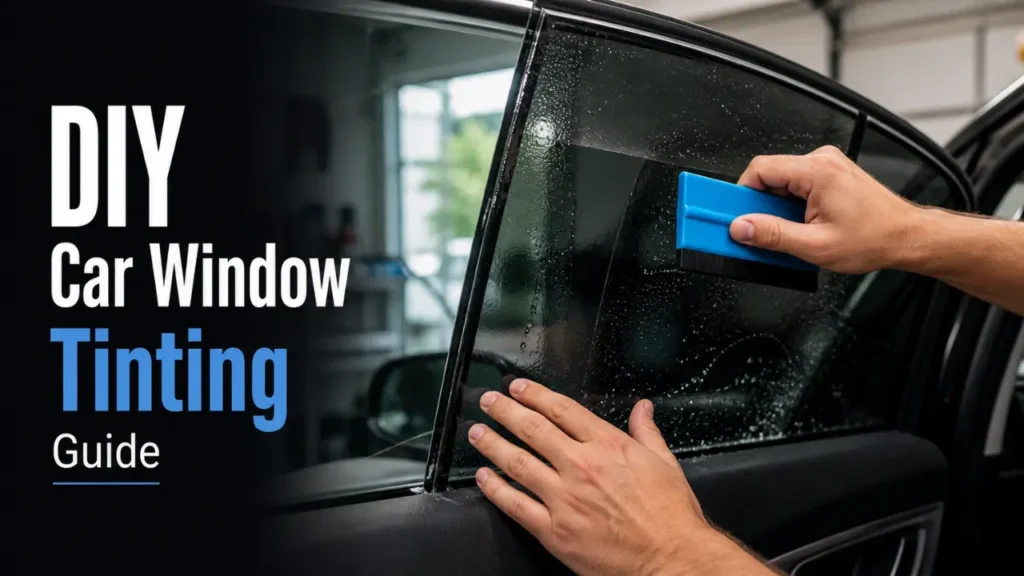
5. Remove Bubbles
Use a squeegee from center outward.
6. Trim Edges
Use a sharp blade for clean finishing.
7. Let It Cure
Drying takes 24–72 hours depending on weather.
U.S. Window Tint Laws (Important)
Tint laws vary by state, but generally:
- Front windshield: Mostly restricted
- Front side windows: Usually 25%–70% VLT required
- Rear windows: Often more flexible
👉 Always check your state DMV or local regulations before installing.
Pro Tips for Best Results
- Work indoors or in shade (avoid dust & wind)
- Use high-quality film (cheap film = peeling & fading)
- Practice on a small window first
- Be patient—rushing ruins the finish
DIY vs Professional Tinting
| Factor | DIY Tinting | Professional |
|---|---|---|
| Cost | Low | Higher |
| Finish | Average | Premium |
| Time | Long | Quick |
| Durability | Medium | Long-lasting |
| Warranty | ❌ None | ✅ Yes |
Best Choice:
- DIY → If you’re on a budget and like hands-on work
- Professional → If you want flawless, long-lasting results
Final Verdict
Yes, you can DIY tint your car windows in the USA—but it’s not beginner-friendly.
If you’re patient and detail-oriented, it can save money. But if you want a clean, bubble-free, and legal finish, hiring a professional is often worth it.