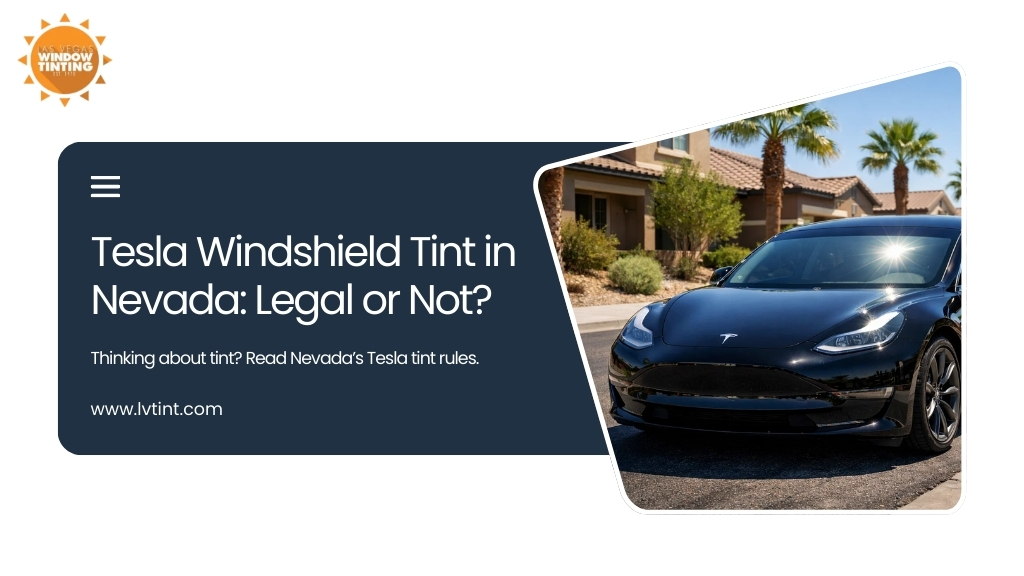
If you drive a Tesla in Nevada, this question comes up fast: can you tint the windshield and still stay legal? Between the desert sun, long commutes, and Tesla’s massive glass area, it makes sense to want more heat rejection and glare control. But Nevada does not treat the windshield the same way it treats rear glass. As of March 11, 2026, Nevada generally does not allow aftermarket film across the full windshield. The main legal exception is a tinted strip at the top of the windshield that meets the state’s measurement and color rules.
That means the real answer to “Tesla windshield tint in Nevada: legal or not?” is yes, but only in a limited way. A full windshield tint is usually not legal for normal drivers. A properly placed top strip may be legal. Front side windows also have their own minimum visible light transmission rule, while rear windows get more flexibility if the car has proper side mirrors.
In this guide, you’ll learn what Nevada law actually says, how it applies to Tesla vehicles, where many drivers get confused, and how to choose a safer, more compliant tint setup before you book an installation.
Is Tesla Windshield Tint in Nevada Legal?
For most Tesla owners, full aftermarket windshield tint is not legal in Nevada. Nevada law bans adding material to the windshield that changes color or reduces light transmission, unless a specific exception applies. The key everyday exception is a strip at the very top of the windshield. That strip is allowed only if the bottom edge stays at least 29 inches above the driver’s seat reference point and the material is not red or amber.
So if a shop is offering a “full front windshield tint” for your Tesla, that setup is usually where the legal risk starts. If the installer is talking about only a top eyebrow strip, that may fit Nevada law if the measurements are correct.
Tesla Windshield Tint in Nevada: What the Law Allows
Nevada’s tint law focuses on added transparent material that alters color or reduces light transmission on the windshield, side windows, or rear window. In plain English, the state is regulating aftermarket film, not just how dark the glass looks once the job is done.
Windshield rules
Nevada allows tint material on only the topmost portion of the windshield for ordinary vehicles. That strip must sit high enough so the bottom edge is at least 29 inches above the undepressed driver’s seat, measured from a point 5 inches in front of the bottom of the backrest, with the seat all the way back and all the way down on a level surface. The strip also cannot be red or amber.
Front side window rules
The windows immediately to the right and left of the driver can be tinted only if the film is nonreflective and the total light transmission through the glass-plus-film combination is at least 35%, with a 7% tolerance. This part matters because film ratings alone do not tell the whole story. What matters legally is the final combined result after the film is on the glass.
Rear side windows and rear glass
Nevada is more flexible with rear side windows and the rear window. They may be tinted if the vehicle has outside mirrors on both sides positioned so the driver can see at least 200 feet to the rear through those mirrors. Most Teslas already have side mirrors, but the legal point is still part of the rule.
Why Tesla Owners Ask About This More Than Other Drivers
Tesla owners are not imagining the heat issue. Teslas have large glass areas, and many drivers want more comfort, less glare, and better cabin cooling during Nevada summers. Tesla’s owner manuals for multiple models say the roof, windshields, and windows provide excellent UV protection, with glass components scoring under 2 on the UV Index scale. That is helpful, but UV protection is not the same thing as legal aftermarket windshield tint.
That distinction matters. A Tesla can already block a lot of UV from the factory, yet Nevada law can still restrict what additional film you place on the windshield. So the decision is not just about comfort. It is about how the state treats extra material added to the glass.
Common Mistakes Tesla Owners Make With Tint
A lot of drivers hear phrases like “clear ceramic,” “heat-blocking film,” or “almost invisible tint” and assume the windshield must be legal because it does not look dark. That is not a safe assumption. Nevada’s rule is not limited to very dark film. It applies to added material that changes color or reduces light transmission, unless an exception covers it.
Another mistake is trusting the film box more than the final meter reading. If your Tesla’s factory glass already has some shading characteristics, the final VLT result may come in lower than expected once the film is installed. For front side windows, Nevada looks at the total transmission through the full combination of glazing and film.
Some owners also confuse the windshield with the glass roof. Tesla’s panoramic glass design makes that easy to do, but the law specifically addresses the windshield and windows. A legal rear setup does not automatically make a windshield setup legal.
What Setup Makes the Most Sense for a Tesla in Nevada?
If your goal is to stay closer to the law while still improving comfort, a practical approach is usually this:
- Keep the full windshield untinted, unless you have a valid exemption.
- Use a legal top windshield strip if you want glare reduction.
- Put a nonreflective, compliant film on the front side windows that still leaves the total VLT at or above Nevada’s threshold.
- Use darker rear-side and rear-window tint if your side mirrors meet the rule.
That setup will not satisfy every driver who wants maximum heat rejection, but it is usually a lower-risk path than doing a full windshield film and hoping nobody notices. This is especially true for Teslas because the large glass area can make any extra windshield film a bigger talking point during a stop or inspection. That last point is a practical inference based on the law’s focus on windshield material and visibility.
What About Factory Tesla Glass?
Nevada law says the tint section does not prohibit a vehicle from being operated or sold with windshield or window material if the vehicle was sold new, or could have been sold new, with that material as standard or optional equipment without violating federal law at the time of manufacture. In simple terms, compliant factory glazing is treated differently from aftermarket film.
So if your Tesla came from the factory with certain glazing characteristics, that alone does not automatically create a problem. The issue usually begins when additional film is installed on top of it, especially on the windshield or front side windows.
Can You Get a Tint Exemption in Nevada?
Yes, Nevada has a window tint exemption process. Official Nevada forms show exemptions may apply for medical reasons and certain vehicle uses such as ambulances, hearses, and some law-enforcement purposes. The state’s application says the approved document, or a copy of it, must be carried in the vehicle at all times. The current form also states that no window tint exemption below 20% VLT will be approved by the Department of Public Safety.
For Tesla owners, that means there may be a legal path if you have a qualifying condition, but it is not something to assume or handle casually. It is paperwork-driven, and the approval matters. Without that exemption, normal windshield rules still apply.
Pro Tips Before You Tint Your Tesla
1. Ask for the final VLT reading, not just the film specification
A “35% film” does not automatically mean your finished front windows are legal. Nevada cares about the total transmission through the full glass-plus-film combination.
2. Get the windshield plan in writing
Ask the installer whether they are doing a top strip only or a full windshield film. Those are very different legal situations in Nevada.
3. Do not assume clear ceramic means legal
A nearly invisible film can still fall under the rule if it reduces light transmission on the windshield.
4. Keep paperwork
If you have a valid exemption, keep the approval in the car. Nevada’s official application says that document must be carried in the vehicle at all times.
Conclusion
So, is Tesla windshield tint in Nevada legal? Only in a limited way. A full aftermarket windshield tint is generally not legal for normal drivers in Nevada. A top strip may be legal if it follows the state’s exact placement and color rules. Front side windows must still meet the 35% total VLT rule, and rear windows get more flexibility when mirror requirements are met.
Before you tint your Tesla, ask the installer for a legal game plan, confirm the final VLT numbers, and check whether your setup needs an exemption. That one extra step can save you money, hassle, and a redo later.